Blog
The Importance of Resistance Bands in Strength Training

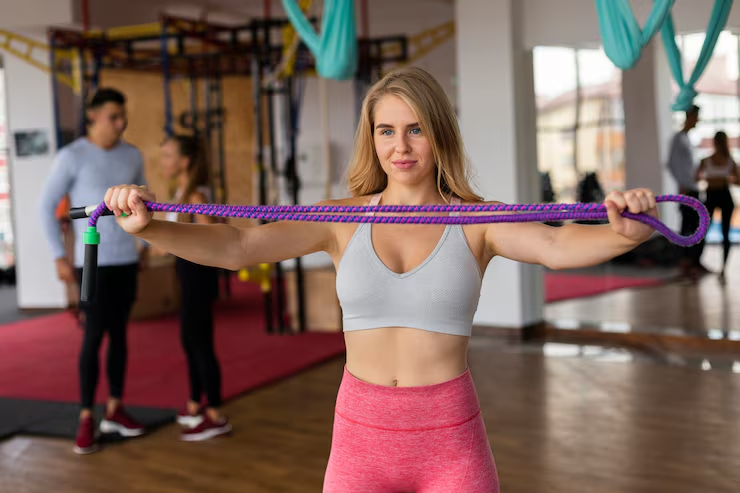
Strength training is essential for building muscle, improving endurance, and boosting overall health. While dumbbells, barbells, and machines dominate many gyms, resistance bands have emerged as an incredibly versatile and effective tool for strength training. They are compact, portable, and suitable for all fitness levels, from beginners to professional athletes. In this guide, we’ll explore why resistance bands are essential, their benefits, and how to incorporate them into your workouts.
1. What Are Resistance Bands?
Resistance bands are elastic bands made from natural or synthetic rubber that provide variable resistance when stretched. Unlike free weights, the resistance increases as the band is stretched, engaging muscles throughout the entire range of motion.
Types of resistance bands include:
- Loop bands: Small circular bands used for lower body exercises.
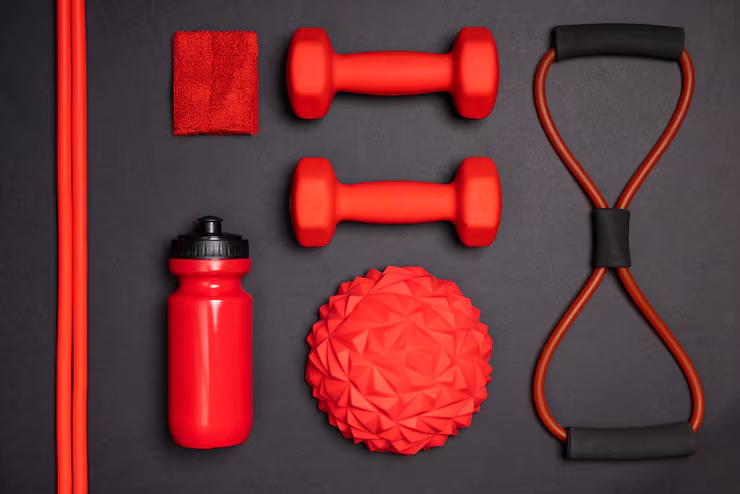
- Tube bands: Tubular bands with handles, ideal for upper body workouts.
- Mini bands: Compact bands perfect for activation exercises like glute bridges.
- Therapy bands: Lightweight bands for rehabilitation and stretching.
2. Benefits of Using Resistance Bands in Strength Training
a. Versatility and Variety
Resistance bands allow for hundreds of exercises targeting all major muscle groups. From squats and lunges to rows and presses, bands provide an alternative to weights that can be adapted to any workout style.
b. Suitable for All Fitness Levels
Whether you’re a beginner or an experienced lifter, bands can be adjusted to your strength. Beginners can start with lighter bands, while advanced users can combine multiple bands for more resistance.
c. Improves Strength and Muscle Activation
Bands provide constant tension during both the concentric (lifting) and eccentric (lowering) phases of an exercise. This increases muscle activation and promotes better strength gains.
d. Enhances Flexibility and Mobility
Resistance bands are excellent for stretching and mobility work. They allow for controlled stretching that improves joint range of motion, reduces stiffness, and prevents injuries.
e. Portable and Space-Efficient
Bands are lightweight, compact, and easy to carry. Whether you are at home, traveling, or outdoors, resistance bands make it possible to maintain your strength routine without bulky gym equipment.
f. Safer on Joints
Unlike heavy free weights, bands provide low-impact resistance, reducing strain on joints, tendons, and ligaments. This makes them ideal for rehabilitation exercises or anyone recovering from injury.
3. How Resistance Bands Compare to Free Weights
While traditional weights are excellent for building strength and mass, resistance bands offer unique advantages:
| Feature | Resistance Bands | Free Weights |
|---|---|---|
| Portability | Highly portable | Bulky and heavy |
| Joint stress | Low-impact | Higher impact |
| Range of motion | Variable tension | Constant load |
| Space requirement | Minimal | Significant |
| Cost | Affordable | Expensive |
Using resistance bands alongside weights can maximize results by combining constant tension with traditional loading techniques.
4. Incorporating Resistance Bands Into Your Workouts
Here are some practical ways to include bands in your routine:
a. Lower Body Exercises
- Squats with band around knees
- Glute bridges and hip thrusts
- Lateral band walks
b. Upper Body Exercises
- Banded rows for back strength
- Chest presses with tube bands
- Shoulder presses and lateral raises
c. Core and Stability Work
- Anti-rotation exercises with bands
- Standing rotations for obliques
- Plank band pulls for added resistance
d. Warm-Up and Rehab
- Pre-workout activation exercises
- Joint mobility drills
- Post-injury strength recovery
5. Tips for Safe and Effective Use
- Check the band for tears or cracks before each use to avoid snapping.
- Anchor bands securely to doors, poles, or sturdy furniture when required.
- Start with the correct resistance level to match your strength.
- Maintain control throughout each exercise; avoid letting the band snap back.
- Combine with weights for progressive overload once comfortable.
6. Choosing the Right Resistance Band
When selecting bands, consider:
- Material quality: Durable, high-quality latex or synthetic rubber lasts longer.
- Resistance levels: Beginner-friendly bands should have lighter tension; advanced users may need medium to heavy bands.
- Length and style: Loop bands for legs and glutes, tube bands with handles for full-body strength.
- Portability: Compact bands are ideal for travel or small home gyms.
7. Advantages for Home Gym Users
For home gym enthusiasts, resistance bands are a game-changer:
- Require minimal space and storage
- Allow full-body workouts without heavy equipment
- Affordable and accessible for all budgets
- Ideal for HIIT, circuit training, and progressive strength programs
Conclusion
Resistance bands are more than just accessories—they are essential tools for anyone serious about strength training. They provide versatility, constant tension, safety, and portability, making them suitable for beginners and advanced athletes alike. Incorporating bands into your workouts can enhance muscle activation, improve flexibility, and complement traditional weights, helping you achieve your fitness goals efficiently.
Upgrade your home gym today with high-quality resistance bands from FixMat and take your strength training to the next level!